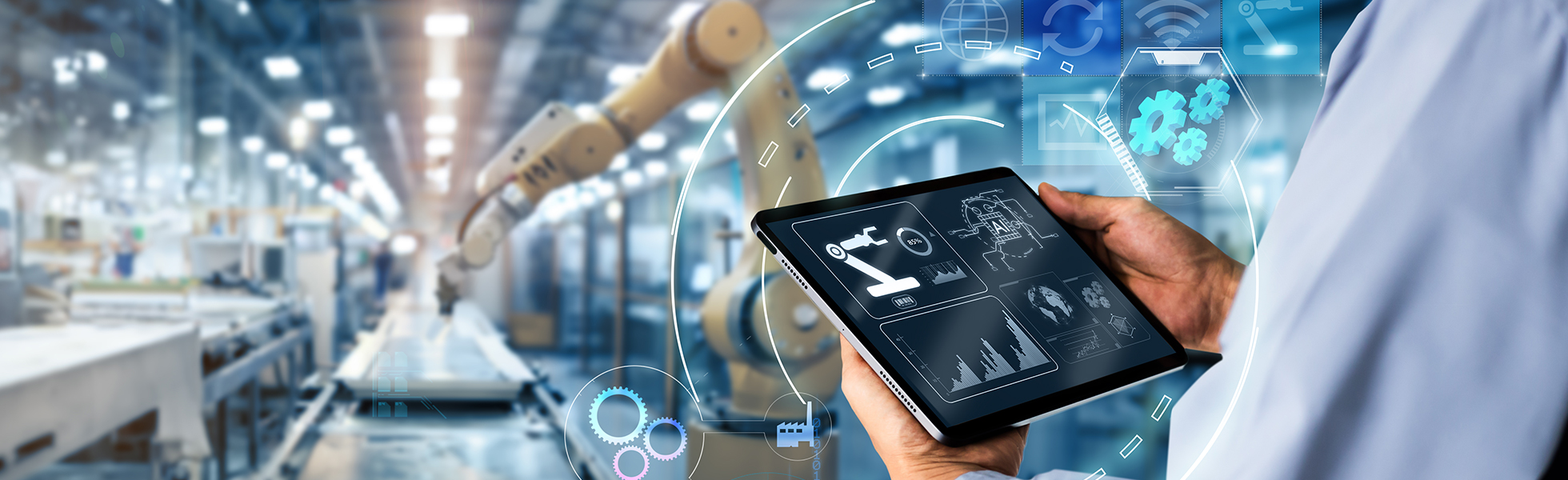
The future of manufacturing lies in data-driven decision-making. With the convergence of Enterprise Resource Planning (ERP) and the Internet of Things (IoT), manufacturers are unlocking unprecedented levels of real-time factory intelligence. This integration transforms traditional factories into smart, connected ecosystems where data from machines, sensors, and systems flows seamlessly into ERP platforms, empowering businesses to act quickly, reduce costs, and improve efficiency.
ERP systems are the backbone of manufacturing, handling critical functions such as production planning, finance, procurement, and supply chain management. However, traditional ERP relies heavily on historical or manually updated data, which often creates delays in decision-making. IoT solves this gap by providing a continuous flow of real-time data from factory machines, equipment, and logistics networks. When these two technologies converge, businesses gain a live, holistic view of operations—from machine performance to raw material usage, from inventory levels to shipment status.
One of the benefits of ERP + IoT is the ability to monitor and respond to events as they happen. For instance, IoT sensors installed on critical machines continuously capture data on vibration, temperature, and usage. When these readings cross defined thresholds, the ERP system automatically generates alerts, schedules maintenance, or even triggers an automated work order. This predictive maintenance model prevents costly unplanned downtime, extending machine lifespans and optimizing technician schedules.
Inventory and supply chain operations also become vastly more efficient. Traditionally, inventory control relied on periodic audits and manual data entry, often resulting in overstock or stockouts. With IoT-enabled tracking technologies, such as RFID and smart pallets, inventory levels are updated in ERP systems in real-time. This enables automatic reordering, minimizes waste, and ensures that material shortages never disrupt production.
Even quality control sees dramatic improvements. Instead of detecting defects only after production runs are complete, IoT sensors monitor environmental and process parameters in real-time during production, instantly identifying issues such as temperature deviations or humidity changes. ERP systems then flag these anomalies, allowing corrective actions to be taken before entire batches are compromised.
Of course, integrating ERP and IoT is not without its challenges. With billions of connected devices, data security becomes paramount. Each IoT sensor is a potential vulnerability if not properly secured with encryption and access controls. Manufacturers must also deal with data overload—millions of data points streaming in from machines, which must be filtered, cleaned, and transformed into meaningful insights. Poor data quality, calibration issues, and legacy equipment without IoT capability can further complicate integration efforts.
Another hurdle is interoperability. Many factories still run older ERP systems or legacy equipment that were never designed for IoT connectivity. This creates integration costs and technical barriers. Additionally, the upfront investment in sensors, networking, and data infrastructure can feel daunting. However, as more case studies demonstrate rapid ROI through reduced downtime, lower maintenance costs, and improved productivity, the business case is becoming increasingly compelling.
Looking ahead, the ERP + IoT partnership will be central to creating self-optimizing factories. Imagine production lines that automatically adjust speeds when demand fluctuates, supply chains that reroute shipments based on real-time disruptions, and ERP systems that provide AI-driven insights to executives for instant decision-making. Reports show that adoption of IoT and AI in manufacturing is accelerating, with 19% of manufacturers already deploying IoT and 29% investing in AI technologies to complement these capabilities.
In this vision of the future, ERP serves as the command center, while IoT functions as the sensory system, together forming the nervous system of a smart factory. This synergy doesn’t just enable incremental improvements; it redefines how factories compete and thrive in the age of Industry 4.0.
We specialize in tailored ERP + IoT integrations, ensuring that whether you’re retrofitting legacy equipment or implementing state-of-the-art smart systems, your data flows seamlessly into a single unified platform. Our solutions don’t just provide dashboards; they deliver actionable insights, empowering managers and executives to make faster, smarter decisions across production, maintenance, and supply chain.
With built-in security, scalability, and continuous support, achieve-ERP ensures that your factory isn’t just connected—it’s future-proof. Our focus on measurable outcomes means clients see early wins such as reduced downtime, fewer defects, and leaner inventory management, with long-term improvements compounding year after year.
The integration of ERP and IoT is ushering in a new era of real-time factory intelligence. Manufacturers that embrace this transformation are already seeing significant cost savings, improved efficiency, and enhanced agility. Those who delay risk falling behind in an industry where speed, data, and intelligence increasingly define success.
If you’re ready to transform your factory into a smart, data-driven operation, achieve-ERP is here to help.